Projects
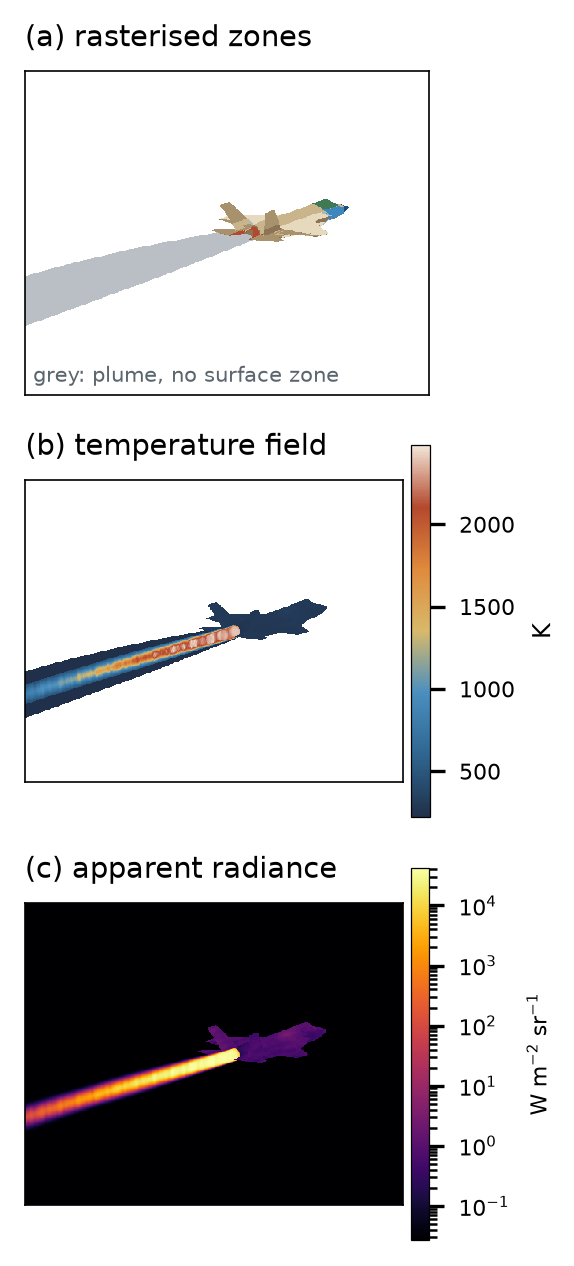 Zones · temperature · radiance
Bounded-Correction Physics-Informed Aerothermal Digital Twin for Radiometrically Calibrated Infrared Signature Synthesis of a Fifth-Generation Fighter Aircraft
This study develops a physics-informed neural network (PINN) based aerothermal digital twin of a fifth-generation fighter aircraft for the synthesis of radiometrically calibrated infrared signatures in the mid-wave (MWIR, 3–5 µm) and long-wave (LWIR, 8–12 µm) atmospheric windows. A deterministic physical baseline couples a compressible boundary-layer solution over nine aerothermal surface zones, a thermodynamic cycle model representative of the F135 turbofan engine and an axisymmetric turbulent exhaust-plume solver with spectral Planck radiometry and Beer–Lambert atmospheric transmission. A neural field conditioned on Mach number, altitude, throttle setting and angle of attack learns only a residual correction to this baseline; the correction is bounded a priori to a prescribed fraction of the admissible temperature span and vanishes smoothly outside the conditioning envelope, so the model recovers the verified physical solution under extrapolation. Relative to an unbounded PINN, the plume-centreline temperature discrepancy is reduced from approximately 9% to 1.18 ± 0.17%; the baseline solver is validated against NASA SHJAR heated-jet measurements, and an 87-check verification and validation suite confirms discrete conservation to machine precision.
Development of an Autonomous Air-to-Air Refuelling System Based on Computer Vision, Artificial Intelligence and Robotics
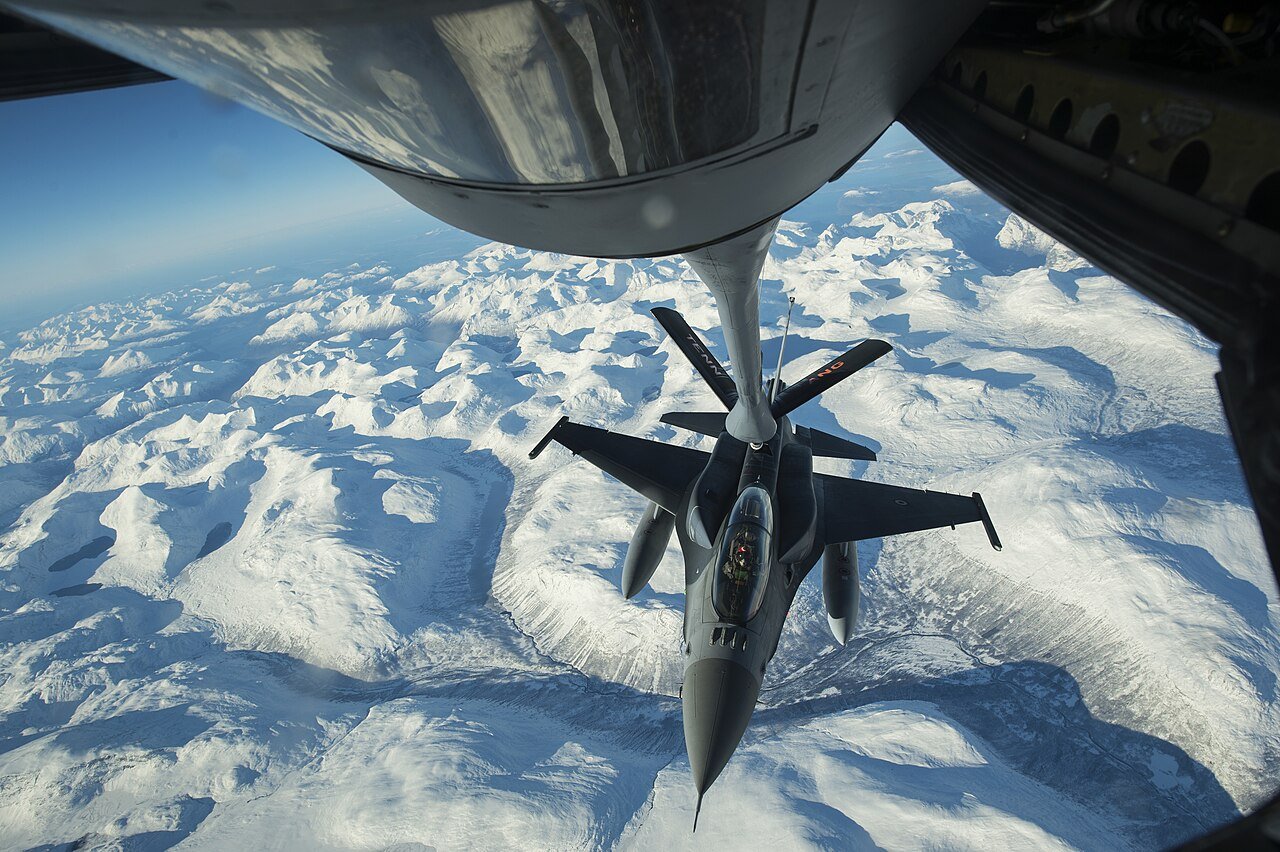
This project develops an end-to-end autonomy architecture for boom–receptacle air-to-air refuelling that removes the dependence on a human boom operator. Photorealistic image and video datasets, generated in a physics-based digital twin with automatically produced segmentation masks, depth maps and 6-DoF reference poses, are used to train deep networks that segment the boom nozzle and the receptacle without markers and estimate their relative pose together with its uncertainty. Treating the boom as a robotic manipulator, the framework fuses the estimates through its kinematics and adaptive Kalman filters, and robust controllers (constrained MPC and H∞) are assessed against conventional baselines under tanker wake, bow-wave, turbulence and gust disturbances.
 Concept illustration
Development of a Thermal Imaging and Artificial Intelligence System for the Non-Destructive Inspection of Wide-Body Aircraft
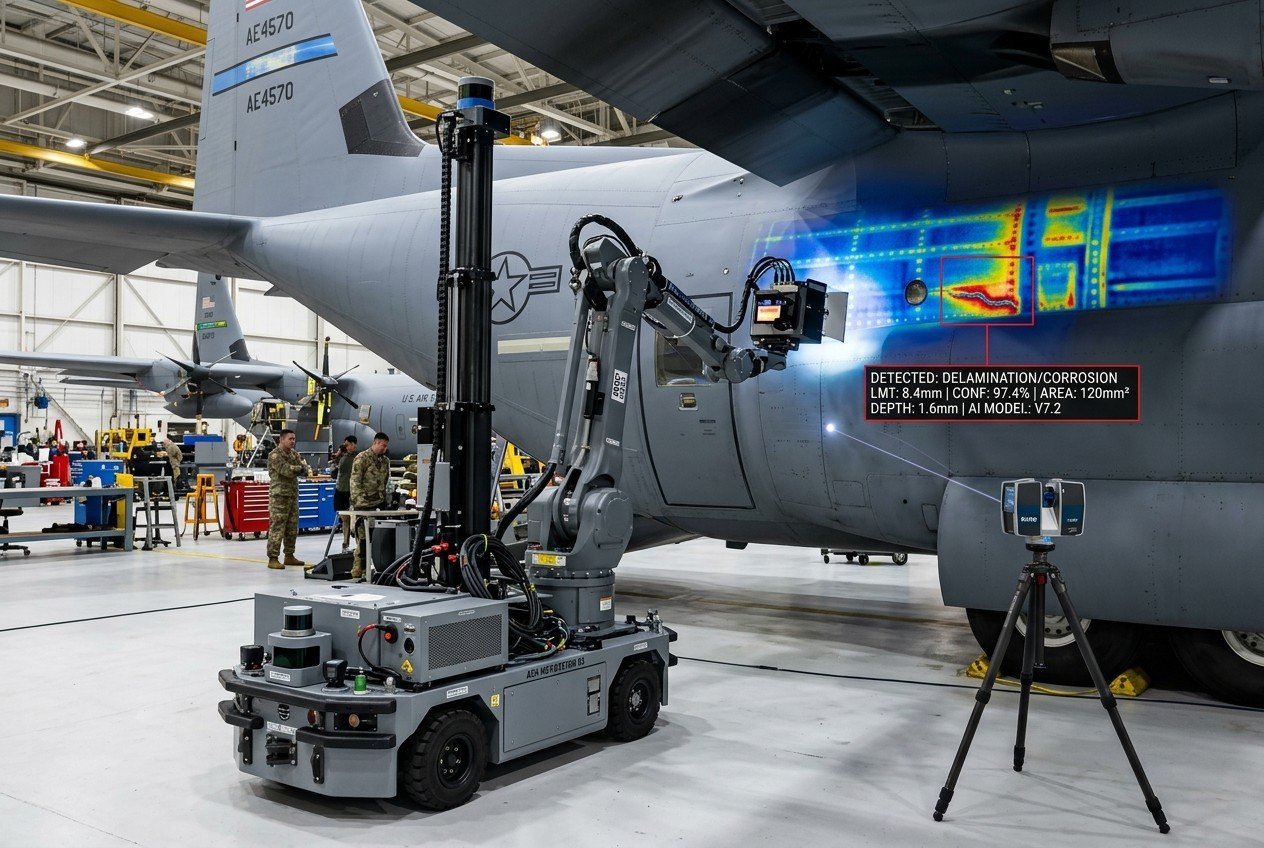
This project addresses the automation of structural non-destructive inspection of large, wide-body aircraft, where visual inspection is operator-dependent and hidden damage is difficult to detect: corrosion beneath paint and within lap joints in metallic fuselages, and barely visible impact damage and delamination in composite structures. The proposed system employs contactless active infrared thermography, with flash excitation for metallic and lock-in excitation for composite structures, deployed by coordinated autonomous mobile manipulators that combine a mobile base, a telescopic tower and a six-axis arm. Laser-tracker metrology registers every measurement to the airframe, AI-based image analysis detects and classifies defects, and the findings are mapped onto a 3D digital twin of the aircraft to support maintenance decisions.
Design, Manufacturing and Performance Analysis of Morphing Wings
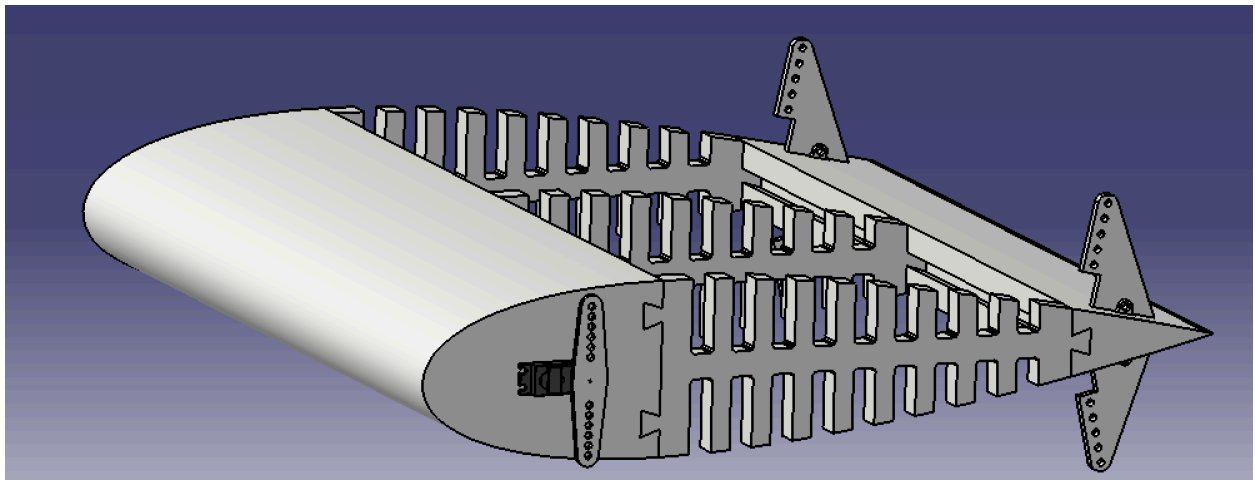
A camber-morphing wing concept was taken through the complete design, manufacturing and analysis chain. A parametric NACA four-digit wing with a compliant internal structure and servo-actuated trailing edge was modelled in CATIA and produced as a 3D-printed prototype. A MATLAB-based tool sweeps camber variations and computes Cl, Cd, Cl/Cd and Cm, together with a drag-based structural load indicator and a simplified life-impact model. Candidate configurations are ranked by a multi-criteria (z-score) scheme into safe, optimal and risky classes, and the trends are verified against XFLR5 panel-method polars.